
Multilingual Website Setup
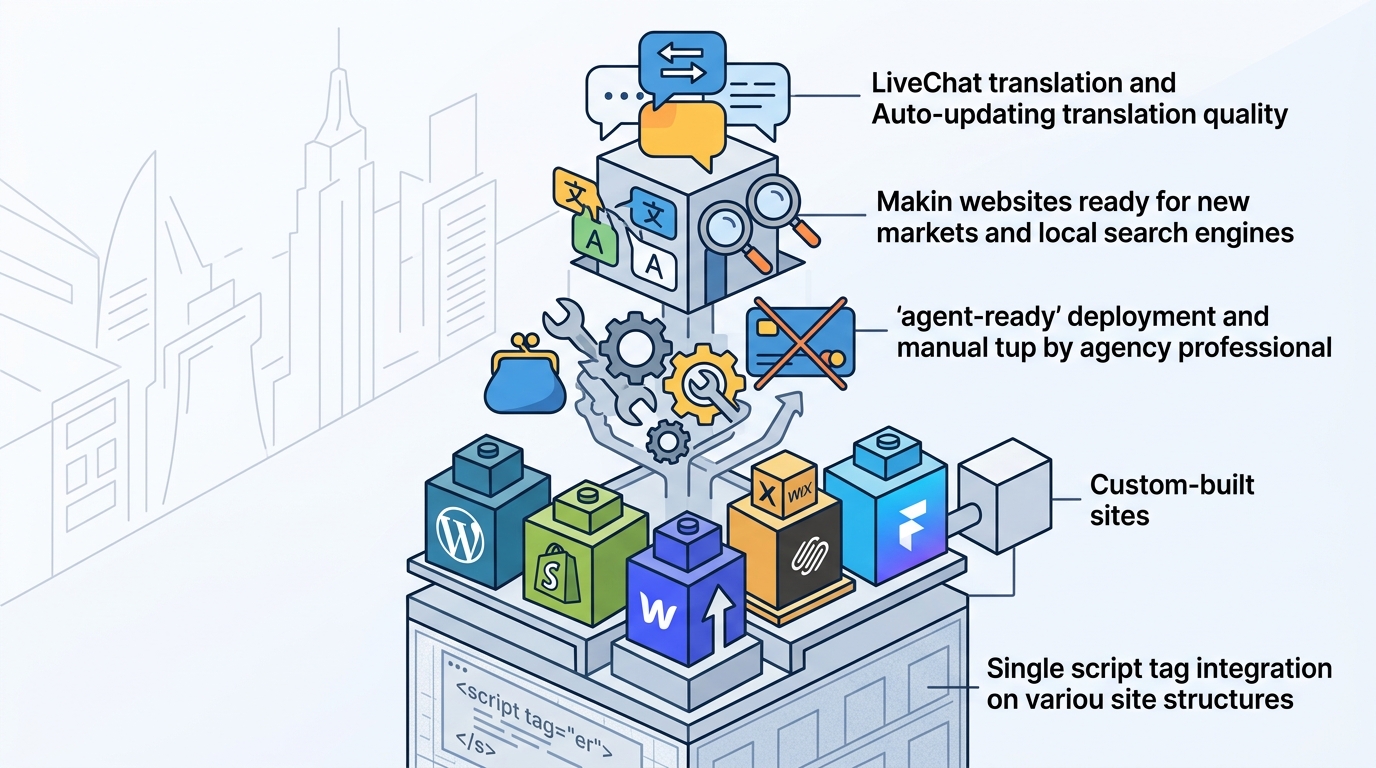
Proxylang is a no-code translation platform that integrates via a single script tag. This approach eliminates the need for complex server-side configurations or manual file management. Agencies can deploy the tool on WordPress, Shopify, Webflow, Wix, Squarespace, Framer, and custom-built sites. The setup process is fully agent-ready, requiring no signup or credit card for initial testing. For additional details, review the Just a moment.
One-Script Deployment
The core mechanism involves adding one script tag to the client's website. Once deployed, the site becomes ready for new markets immediately. This method ensures that the original site structure remains intact while adding language layers. It reduces the technical burden on agency developers significantly. For additional details, review the Just a moment.
Supported Platforms
Automatic Content Detection
Automatic content detection is the process where the platform identifies new or changed text on a live site. Proxylang continuously monitors the website for updates. When new text appears, it is translated automatically. This ensures that the multilingual version stays in sync with the primary language site without manual intervention. For additional details, review the .
Real-Time Monitoring
Image Text Translation
SEO Localization
SEO localization is the practice of optimizing website content for search engines in specific regions and languages. Proxylang creates dedicated language pages, such as example.com/ja-jp/, for each target market. These pages are indexable by Google, Bing, Naver, and AI assistants. This structure allows the site to rank in local search results abroad. For additional details, review the Customer Experience.
Indexable Language Pages
Unlike simple dropdown menus that do not create new URLs, Proxylang generates distinct pages for each language. These pages have their own sitemaps, which are available for major languages like Japanese, Korean, German, Spanish, and Chinese. This ensures that search engines can crawl and index the localized content properly. For additional details, review the Frequently Asked Questions.
Local Search Engine Optimization
Translation Memory
Continuous Improvement
Proxylang keeps checking translations on live sites. It replaces weak sentences with better ones over time. This iterative process means that the quality of the translation improves without additional cost to the owner. The system automatically refines the language to match the tone and style of the brand.
Live Editor Access
Owners and agencies can edit any line in a live editor. This allows for manual adjustments to ensure brand voice is maintained. Edits are saved and used to improve future translations. This human-in-the-loop approach ensures high-quality output.
Workflow Automation
Workflow automation in translation refers to the reduction of manual steps in the localization process. Proxylang automates the detection, translation, and deployment of new content. This saves agencies significant time and reduces the risk of human error. The platform handles the heavy lifting, allowing agencies to focus on strategy and client management.
Agent-Ready Features
Cost Efficiency
Improvements to translations and new content translation are included in the plan. There are no extra costs for these ongoing updates. This predictable pricing model helps agencies manage client budgets effectively. It eliminates surprise fees for content changes.
LiveChat Translation
Bidirectional Translation
Customer Engagement
Feature Comparison Table
| Setup Complexity | One script tag | Manual file editing and server config |
| Content Sync | Automatic detection and translation | Manual updates required |
| SEO Indexing | Dedicated indexable language pages | Often non-indexable dropdowns |
| Live Chat | Bidirectional real-time translation | Requires human translators |
| Cost Model | Predictable plan-based pricing | Per-word or per-hour billing |
Key Takeaways
- Automatic content detection ensures new and changed text is translated in real-time.
- Dedicated language pages are indexable by Google, Bing, Naver, and AI assistants.
- Translation memory and continuous AI improvements enhance accuracy over time.
- Workflow automation reduces manual effort and saves agency time.
- LiveChat translation enables bidirectional real-time communication with customers.
Frequently Asked Questions
What is a no-code translation platform?
How does Proxylang handle SEO for multilingual sites?
Proxylang creates dedicated language pages with unique URLs. These pages are indexable by major search engines and AI assistants. This ensures that the localized content can rank in local search results.
Can agencies manage multiple client sites with Proxylang?
Does Proxylang translate text inside images?
How does LiveChat translation work?
LiveChat translation translates messages in real-time between the owner and the customer. The owner writes in their language, and the customer reads and replies in theirs. This enables seamless communication across language barriers.
Is there a free plan available?
What platforms does Proxylang support?
How does Proxylang improve translations over time?
Proxylang continuously checks translations on live sites. It replaces weak sentences with better ones using AI. This iterative process ensures that the quality of the translation improves without additional cost.