
Script tag translation differs from standard browser features by injecting a lightweight code snippet that dynamically rewrites page text in the visitor's browser, whereas native browser translation relies on local device processing without server-side context. This approach allows for real-time, context-aware updates that standard browser tools often lack. This guide covers the technical implementation, SEO implications, and practical benefits of using a script tag for website localization.
Script Tag Implementation
A script tag translation approach is a method where a single line of JavaScript code is added to a website's header or footer to enable multilingual capabilities. This technique allows the site to detect the visitor's preferred language and dynamically translate the content on the fly. The implementation is minimal, requiring no changes to the underlying HTML structure or content management system.
How the Script Works
When a visitor loads a page, the script identifies the user's language preference through browser settings or a manual selector. It then fetches translated strings from a translation service and replaces the original text in the DOM. This process happens in milliseconds, ensuring a seamless user experience. The script can also handle dynamic content, such as new blog posts or product updates, by translating them as they are rendered.
Integration with Modern Stacks
Script tag solutions are highly compatible with modern web technologies, including React, Vue, and static site generators. Because the translation occurs on the client side, it works with any framework that renders HTML in the browser. This flexibility makes it an ideal choice for developers who want to add multilingual support without rebuilding their site architecture.
Limitations of Standard Browser Features
Standard browser translation features, such as those found in Chrome or Safari, rely on local machine translation engines to convert text. While convenient for individual users, these features have significant limitations for website owners. They do not provide a consistent experience across all users, nor do they offer control over the translation quality or terminology.
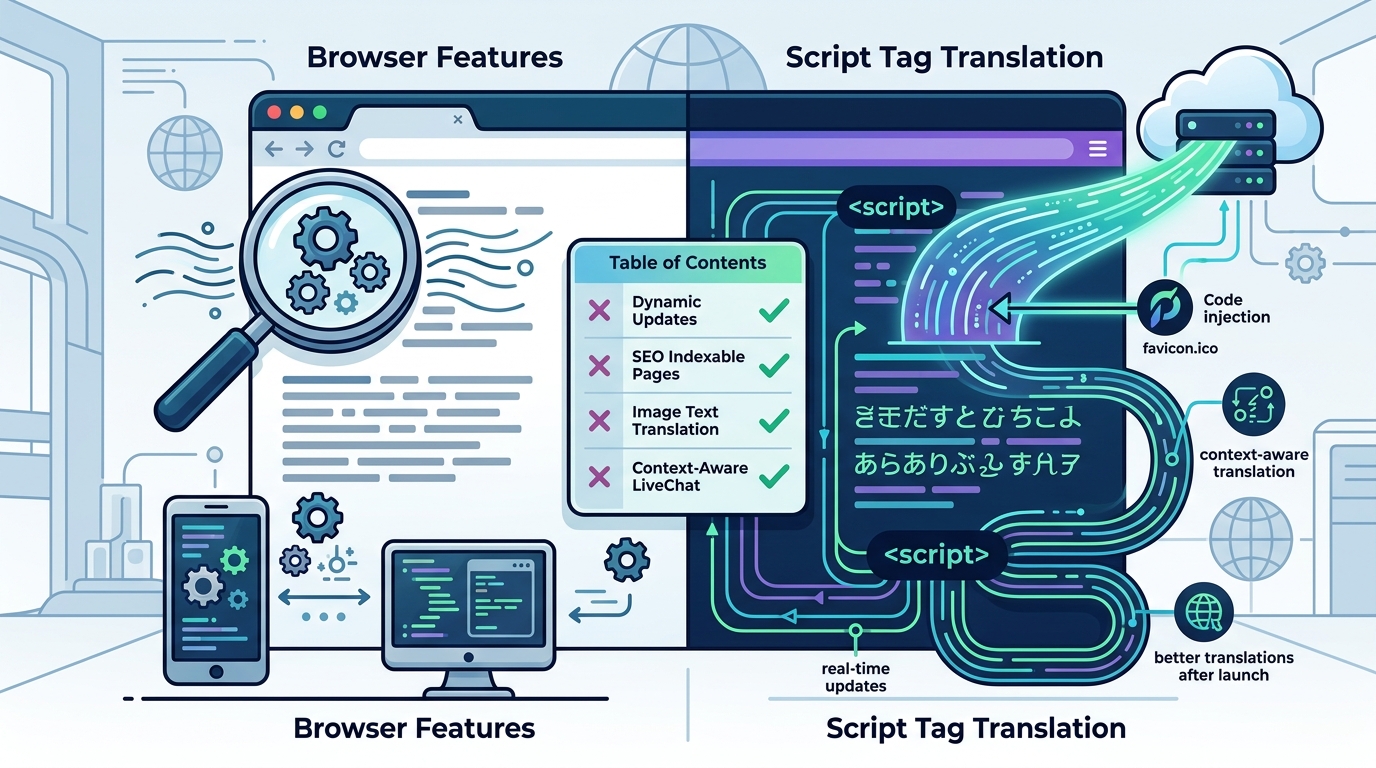
Lack of Context Awareness
Browser translation engines often lack the context needed to translate specialized or brand-specific terms accurately. For example, a product name or a technical term might be translated literally, resulting in confusing or incorrect output. This lack of context awareness can undermine the credibility of a professional website, especially in industries where precision is critical.
No SEO Benefits
One of the most critical limitations of browser translation is that it offers no search engine optimization benefits. Search engines like Google and Bing cannot index the translated text because it is generated locally on the user's device. This means that a website relying solely on browser translation will not appear in search results for users searching in other languages, missing out on a significant portion of global traffic.
SEO and Search Engine Indexing
Search engine optimization for multilingual websites requires that translated pages are served as real, indexable HTML. A script tag translation approach can be configured to work in different modes, such as hybrid or proxy, to ensure that search engines can crawl and index the translated content. This is a key differentiator from standard browser features, which do not create indexable pages.
Hybrid Mode for SEO
In hybrid mode, the script tag provides instant client-side translation for visitors, while search engines receive pre-rendered, server-side translated HTML. This dual approach ensures that users get a fast, seamless experience, and search engines can index the translated pages for better visibility. This mode is particularly useful for marketing sites that want to be found in multiple languages without compromising performance.
Localized URLs and Hreflang Tags
Proper multilingual SEO also involves using localized URLs and hreflang tags to signal to search engines which language and region a page is intended for. A robust script tag solution can automatically generate these tags and create clean, per-language subdirectory URLs, such as /es/ or /fr/. This structure helps search engines understand the site's architecture and improves the chances of ranking in international search results.
Comparison: Script Tag vs Browser Translation
The following table summarizes the key differences between a script tag translation approach and standard browser translation features. This comparison highlights why a dedicated script tag solution is often the preferred choice for businesses looking to expand globally.
| Feature | Script Tag Translation | Standard Browser Translation |
|---|---|---|
| Implementation | Single line of code | Built into browser |
| Translation Quality | Context-aware, customizable | Generic, literal |
| SEO Indexing | Indexable in hybrid/proxy modes | Not indexable |
| User Experience | Consistent across all users | Varies by device and browser |
| Control | Full control over terminology | No control |
Key Takeaways
- Script tag translation is a lightweight, client-side method that dynamically rewrites page text in the visitor's browser.
- Standard browser translation features rely on local engines and lack context awareness, leading to inconsistent quality.
- Browser translation offers no SEO benefits, as search engines cannot index locally generated text.
- Hybrid mode in script tag solutions provides both fast client-side translation and server-side indexable HTML for search engines.
- Localized URLs and hreflang tags are essential for multilingual SEO and are often automatically generated by script tag tools.
- Script tag solutions offer full control over terminology and brand names, ensuring consistent and accurate translations.
- Implementing a script tag is simple and compatible with modern web technologies, making it an ideal choice for global expansion.
Frequently Asked Questions
What is a script tag translation approach?
A script tag translation approach is a method where a single line of JavaScript code is added to a website to enable dynamic, client-side translation of content in the visitor's preferred language.
How does script tag translation differ from browser translation?
Script tag translation uses a dedicated service to provide context-aware, customizable translations, while browser translation relies on local, generic engines that lack context and offer no SEO benefits.
Can script tag translation help with SEO?
Yes, in hybrid or proxy modes, script tag translation can serve indexable HTML to search engines, allowing translated pages to be crawled and ranked in international search results.
Is script tag translation compatible with modern web frameworks?
Yes, script tag solutions are highly compatible with modern web technologies, including React, Vue, and static site generators, as they operate on the client side.
What are the limitations of standard browser translation?
Standard browser translation lacks context awareness, offers no SEO benefits, and provides no control over translation quality or terminology, leading to inconsistent user experiences.
How does hybrid mode work in script tag translation?
Hybrid mode provides instant client-side translation for visitors while serving pre-rendered, server-side translated HTML to search engines, ensuring both a fast user experience and SEO visibility.
Conclusion
Choosing the right translation method is critical for businesses looking to expand globally. While standard browser features offer a convenient, no-code solution for individual users, they lack the control, quality, and SEO benefits required for a professional multilingual website. A script tag translation approach provides a powerful, flexible, and SEO-friendly alternative that ensures consistent, context-aware translations and improved visibility in international search results. By leveraging a dedicated script tag solution, businesses can create a seamless multilingual experience that drives engagement and growth in new markets.
To start your global expansion, visit Proxylang to learn more about their script tag translation services and see how they can help your website reach customers in 77+ languages.